
By Brittany Raftis, MScFN, RD
If you’ve been to a grocery store recently, or even just scrolled social media, you’ve probably noticed that protein is everywhere. From protein cereal and bread to protein milk, chips, ice cream, and even candy, the category has expanded far beyond traditional sources. This shift reflects how protein is increasingly emphasized in the diet and can make interpreting labels and selecting appropriate protein sources more challenging in practice.
Why Protein Matters Now
Protein is an essential nutrient and a key structural component of many tissues. While its importance has long been established, recent shifts in dietary guidance and increased attention on social media have helped elevate protein from simply essential to a primary focus in how people think about nutrition.
The 2025–2030 Dietary Guidelines for Americans highlight the importance of including protein foods in a balanced diet, with suggested intakes of 1.2–1.6 g/kg/day for adults.1At the same time, messaging around protein’s role in satiety, weight management, and physical performance has become more prominent. Together, these shifts have contributed to increased consumer demand for higher-protein foods.
This increased emphasis on protein is also evident in consumer label reading behaviors. According to the International Food Information Council (IFIC) April 2026 survey on Americans’ Perceptions of Protein & Protein Labeling, 37% of Americans look for protein content on the Nutrition Facts table when selecting foods. Many consumers report that protein quality is important when selecting products, and view protein as supportive of overall health.2
Protein Claims
Nearly 50% of IFIC survey respondents seeking protein information on the package report looking for it on the front of food packaging when selecting products.2Given this, it’s not surprising that protein claims have become increasingly prominent as a marketing tool.
For example:
-
Nutrient content claims are frequently featured, such as “high in protein” (≥20% Daily Value (DV)) or“plus protein” (≥10% more protein than a reference product).3
-
Protein is also emphasized more generally on the front of packaging. Products may display grams of protein prominently (e.g., 15 g protein) or incorporate “protein” into the product name (e.g., protein soda).3
Protein Quality: PDCAAS and the Daily Value (DV)
Percent DV for protein must be included on a food label only when a protein claim has been made or if the product is intended for children under 4 years old.3 In the IFIC consumer study, about half (47%) of respondents say it would be helpful to see how much food contributes toward their daily protein needs,2 making this an important teaching point for consumers.
The %DV for protein is based on a reference intake of 50 g/day and is adjusted for protein quality using the Protein Digestibility-Corrected Amino Acid Score (PDCAAS), which accounts for amino acid composition and digestibility.5,6
As shown below, products with similar amounts of protein in grams can display very different %DV values depending on the protein source. A product made with a high-quality protein (e.g., soy or whey protein) may reflect the full protein content, while a product containing an incomplete protein, such as collagen, may show a lower %DV than the total grams of protein would suggest. Importantly, reporting %DV for protein is only required on food labels when a front-of-pack protein claim has been made or if the product is intended for children under 4 years old, so its absence could be an early indicator that a product is “protein washed.” Among consumers who seek out protein information on food packaging, the most helpful details are protein sources (in the ingredient list) and amounts (on the Nutrition Facts label of front of the package).2
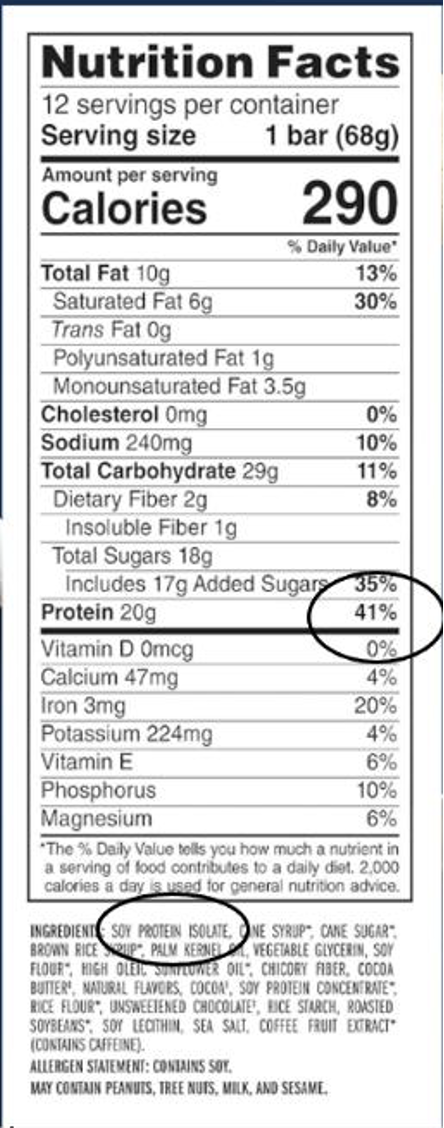
Figure 1: Main protein source is soy protein isolate, a high-quality protein with a PDCAAS score of 1.0.
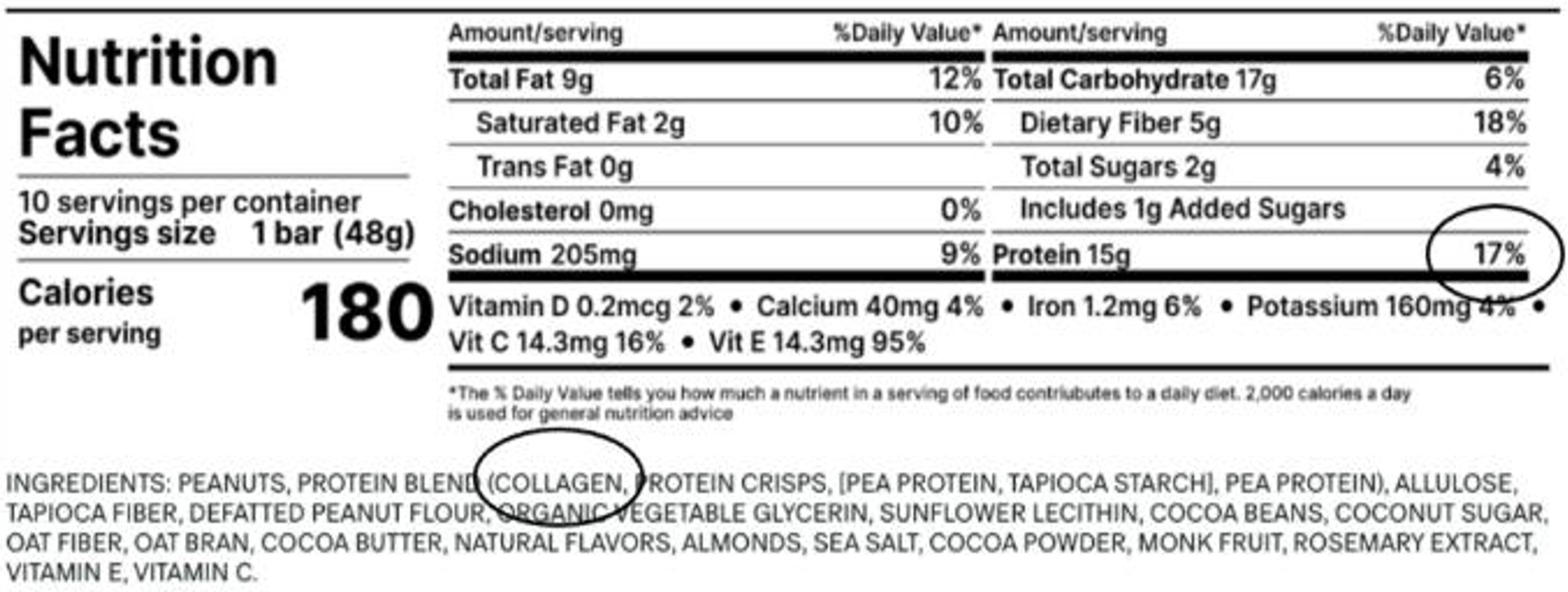
Figure 2: Main protein sources are peanuts and collagen, with PDCAAS scores of 0.5 and 0.0, respectively.
How to Identify Functional from Protein-Washed Foods
In today’s protein-focused food environment, the market has become increasingly saturated. Not all protein-containing foods provide meaningful nutritional value. There is an important distinction between functional protein sources, which contribute positively to overall dietary intake, and protein-washed foods, where protein is added primarily for marketing purposes. Use the following criteria to assess the quality of a packaged high protein food.
| Criteria | Functional protein product | Protein-washed product |
| Beneficial nutrients | Often contains additional nutrients that support overall diet quality (e.g., high-protein yogurt with calcium or a high-protein and fiber cereal) | Provides little additional nutritional value beyond protein (e.g., protein pastry) |
| High-risk nutrients (e.g., saturated fat, added sugar, sodium) | Typically low to moderate in nutrients of concern | May be high in nutrients of concern (e.g., protein chips that are high in sodium) |
| Role in meeting protein needs | Helps address gaps in intake (e.g., a protein bread helping to boost the protein content of an otherwise low protein breakfast, or a protein drink helping to hit a protein target between meals) | Adds protein in contexts where it may not be needed (e.g., protein ice cream used as dessert) |
| Contribution to dietary pattern | Supports overall diet quality when used strategically | May displace more nutrient-dense options (e.g., protein cookie replacing a balanced snack) |
| Protein content | Provides a meaningful amount of protein relative to needs | May provide only modest amounts despite claims (e.g., a protein cereal that is only a few grams higher in protein compared to the original, or a protein frozen dinner that does not provide enough protein for a meal target) |
Putting it Into Practice
Packaged, protein-rich foods can play a useful role in helping clients meet their protein needs, particularly when time, access, or preparation are barriers to using whole food sources. However, these products are not all created equal.
In practice, evaluating both protein content and overall nutritional quality is essential when interpreting food labels. Considering how a product fits within an individual’s dietary pattern, and whether it meaningfully helps address a gap in intake, can guide more effective and practical recommendations.
Ultimately, the opportunity is not to change the science, but to better translate it. Educating clients to look beyond protein claims and assess the product as a whole can help align nutrition guidance with how people actually choose, purchase, and eat food – supporting decisions that reflect both their goals and real-world needs.
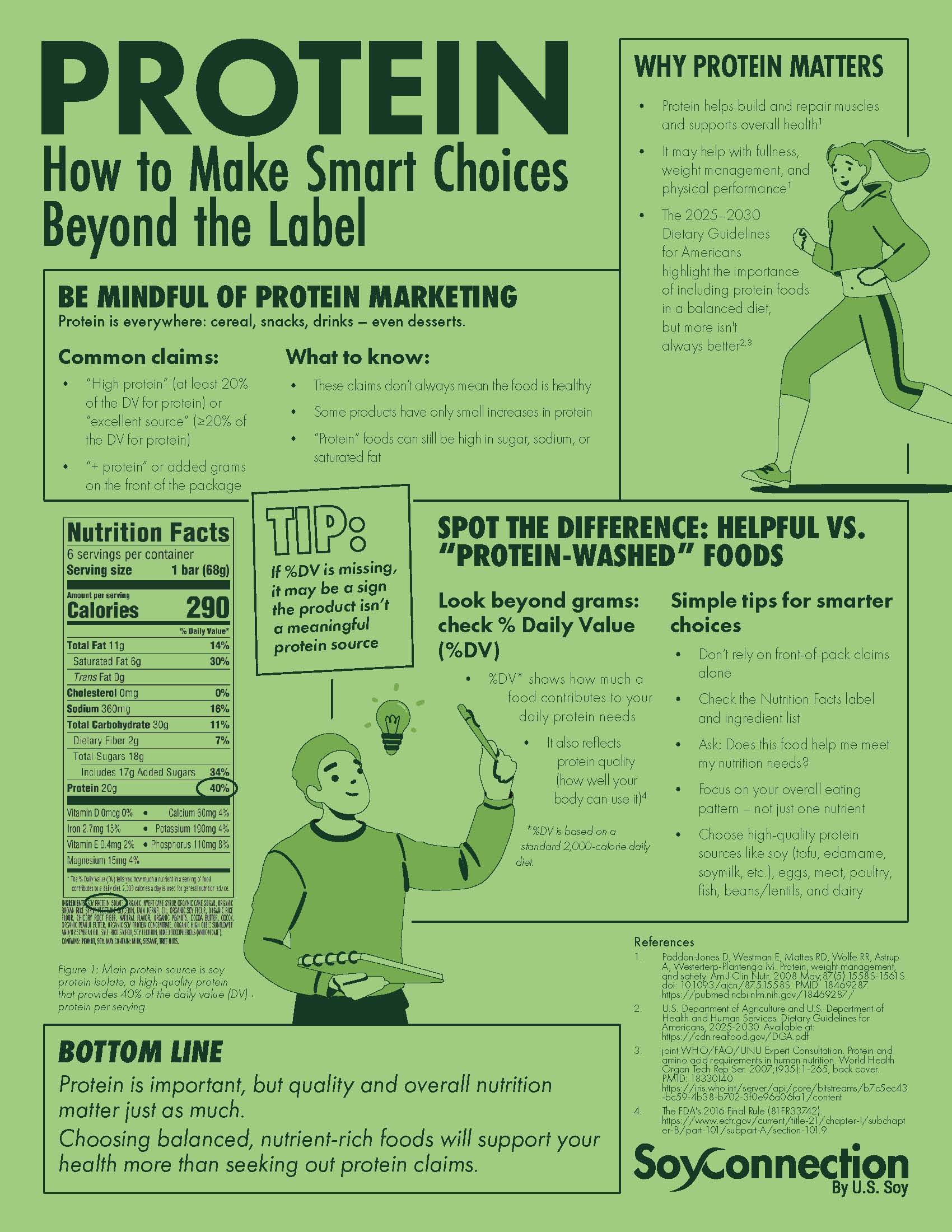
Download Healthy Handout for Patients and Clients
REFERENCES
-
U.S. Department of Agriculture and U.S. Department of Health and Human Services. Dietary Guidelines for Americans, 2025-2030. Available at: https://cdn.realfood.gov/DGA.pdf
-
International Food Information Council Spotlight Survey: Americans’ Perceptions Of Protein Quality & Labeling. April, 2026. Available at: https://ific.org/research/perceptions-protein-quality-labeling/
-
U. S Food and Drug Administration Centre for Food Safety and Applied Nutrition. Department of Health and Human Services. A Food Labelling Guide: Guidance for Industry. January 2013. Available at: https://www.fda.gov/files/food/published/Food-Labeling-Guide-%28PDF%29.pdf
-
https://www.ecfr.gov/current/title-21/chapter-I/subchapter-B/part-101/subpart-D/section-101.54
-
https://www.cheerios.com/products/cinnamon-cheerios-protein.
-
U. S. Food and Drug Administration. Daily Value on the Nutrition and Supplement Facts Labels. May, 2024. Available at: https://www.fda.gov/food/nutrition-facts-label/daily-value-nutrition-and-supplement-facts-labels
-
FAO, WHO (1991) Protein Quality Evaluation: Report of the Joint FAO/WHO Expert Consultation, FAOFood and Nutrition: Paper 51. Rome, Italy: FAO, WHO.
Connect with us through our social channels